Compression and Release — Why the Best Rooms Are Preceded by Small Spaces
A generous room entered directly will never feel as generous as one preceded by a compressed space. Here is how the most powerful spatial device works.
In this article
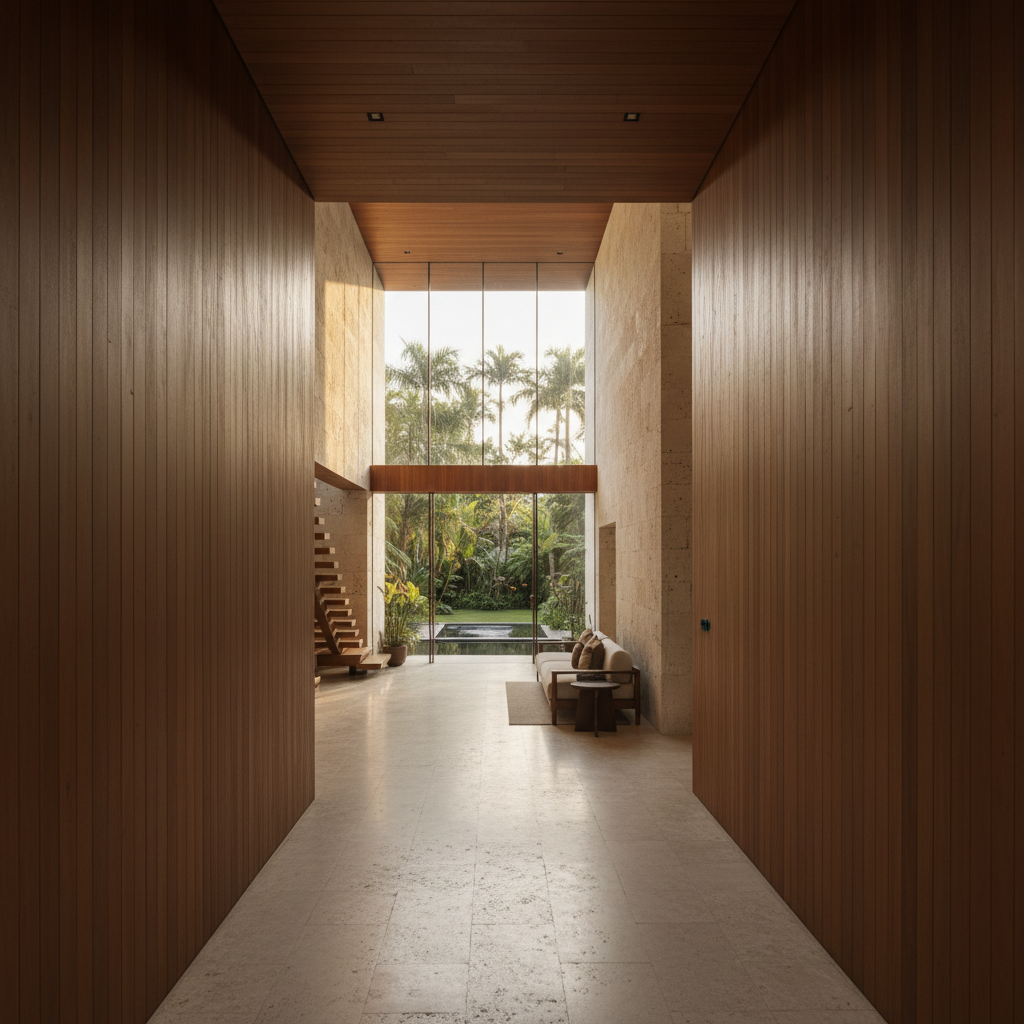
The most powerful spatial experience in architecture is not the largest room — it is the moment of transition from a compressed space into a generous one. This principle is deeply embedded in Indonesian spatial traditions yet frequently abandoned in modern design.

Spatial sequence diagram showing the rhythm of compression (narrow, low, dark) and release (wide, high, light) that makes architectural experiences memorable. Each compression makes the next release more dramatic.
The Principle of Contrast
The human eye perceives space not in absolute terms but by comparison. A room that follows a lower, narrower space feels taller and wider than it actually is.
Architecture that ignores this principle produces spaces that are accurate on paper but flat in experience.

Privacy gradient and view corridor plan showing how spatial experiences are sequenced: from public entry through semi-private transition to private sanctuary, with controlled views at each stage.
Traditional Indonesian Wisdom
The Balinese angkul-angkul and Javanese pendopo demonstrate compression and release — narrow gates opening into courtyards, covered transitions releasing into reception spaces.
These traditional sequences manage social interaction, privacy, and climatic transition simultaneously.
The Failed Double-Volume
A double-volume entered directly offers no contrast and therefore no experience. The height is immediately apparent and immediately taken for granted.
A double-volume that follows a compressed entry transforms that same volume into an experience. The contrast makes the height felt rather than seen.
Concepta design process includes a spatial experience study mapping compression and release moments throughout the home.
Thresholds as Emotional Markers
Every threshold in a well-designed home marks an emotional transition. The moment you step from a covered entrance into a double-height living space is not merely a change of level—it is a shift in mood, expectation, and awareness. Architects design these thresholds deliberately, using changes in ceiling height, floor material, light level, and view to signal that you are entering a different kind of space. A low doorway that opens into a tall room creates a memorable contrast. A dark entry that leads to a sunlit courtyard makes the light feel more precious. These threshold experiences are what guests remember long after they forget the furniture or the wall colour.
Applying the Principle in Indonesian Homes
Indonesian traditional architecture understands compression and release intuitively. The pendopo (open pavilion) is preceded by a low gate and a narrow garden path. The omah (main house) is accessed through a sequence of increasingly private spaces. Modern tropical homes can apply the same principles: a low-ceilinged entry hall that opens into a double-height living space, a narrow corridor that widens into a courtyard view, a covered walkway that releases onto an open pool deck. These spatial sequences create the memorable experiences that distinguish architect-designed homes from conventional construction, and they cost very little to implement when planned from the start.
The Cost of Getting Spatial Sequence Wrong
A poorly designed spatial sequence is the most common and most expensive mistake in residential architecture. When a front door opens directly into a living room with no transition, the space feels exposed and the sense of arrival is lost. When every room has the same ceiling height, the spatial experience becomes monotonous and forgettable. When corridors are tight and dark, the house feels smaller than its actual square meterage. These mistakes cost very little to fix during design but are prohibitively expensive to correct after construction. The architect's skill in sequencing spaces—knowing when to compress and when to release—is what separates a house that feels expansive from one that merely is large. This sequencing costs no more to build than a flat, monotonous layout, yet it transforms the emotional experience of living in the home.

Concepta Studio
Architecture studio, Jakarta
Human reviewed
Have a Project in Mind?
We work selectively with clients who value thoughtful, intelligent architecture.
Start a Conversation