Cross-Ventilation Without an Architect — Why It Fails and How to Fix It
Cross-ventilation is the most commonly claimed but least successfully implemented passive strategy in Indonesian tropical homes. Here is how natural ventilation actually works.
In this article
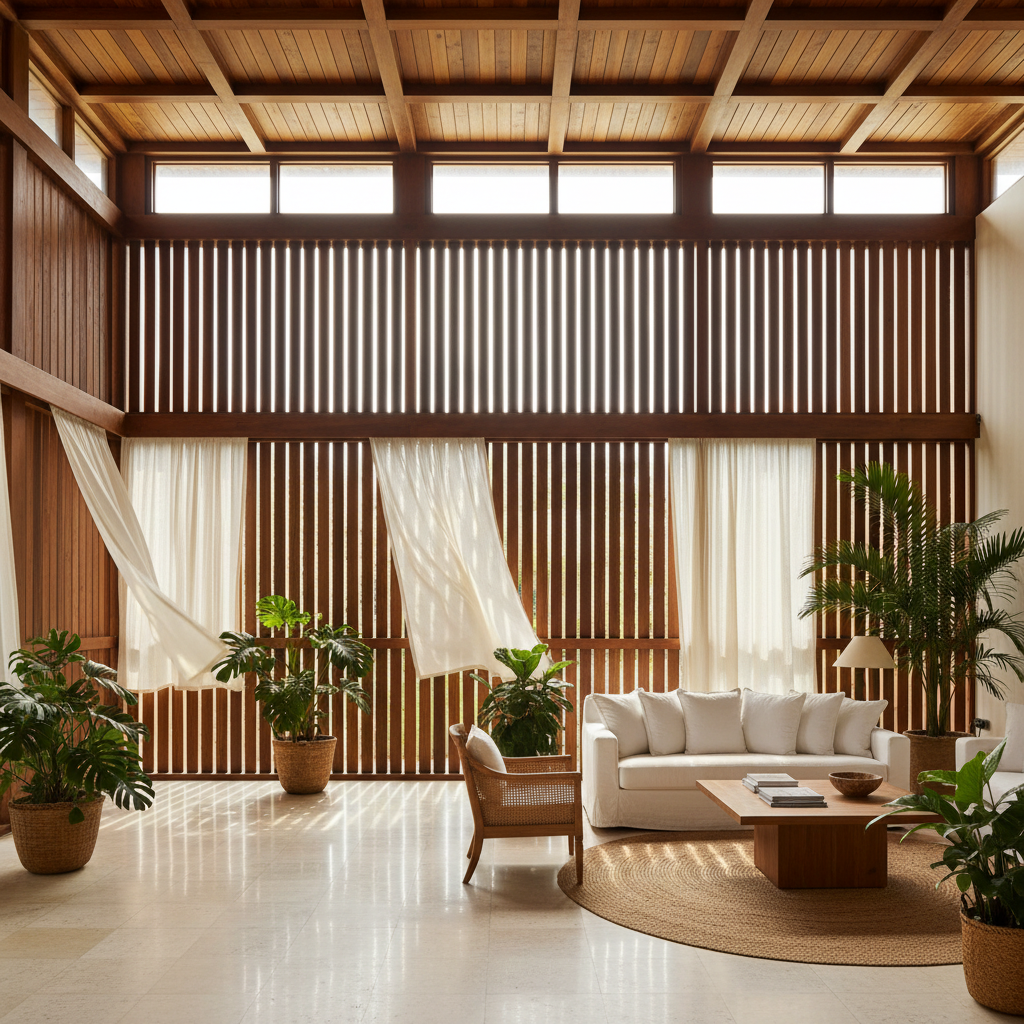
Cross-ventilation is the most commonly claimed — and least successfully implemented — passive design strategy in Indonesian tropical homes. Every architect draws arrows on the plan showing airflow paths. Yet most cross-ventilation strategies fail because they ignore the physics of airflow.

Cross-ventilation section: low inlets on the windward facade draw cool air through the occupied zone; high outlets on the leeward side exhaust warm air via stack effect. The outlet must be larger or positioned higher to drive continuous airflow.
The Arrow Fallacy
The most common mistake is the arrow fallacy: assuming drawing an arrow from one window to another guarantees airflow. Air follows pressure differentials, not arrows on a plan.
A room with windows on two opposite walls will not achieve cross-ventilation if both windows are the same size at the same height — equal pressure on both sides means no movement.
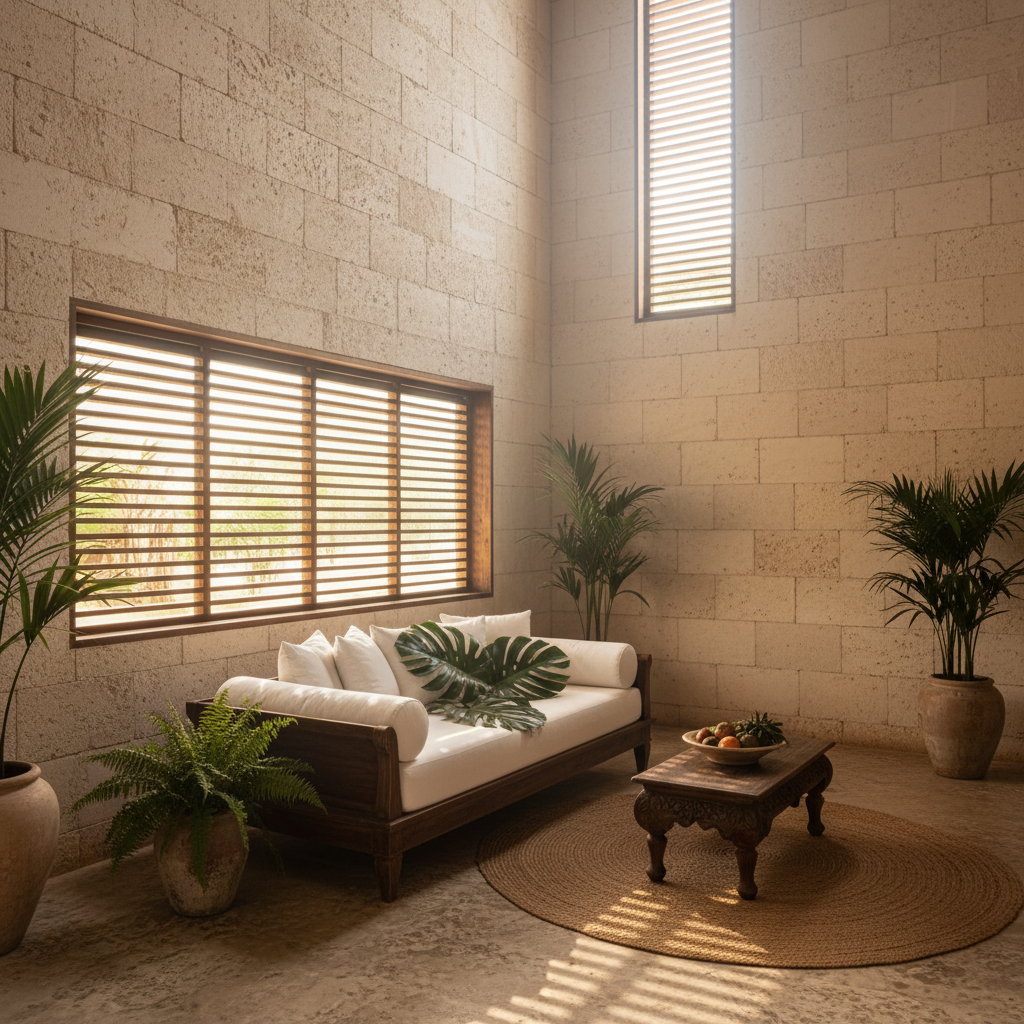
Cross-ventilation physics: inlet facing prevailing wind, unobstructed path, outlet larger or higher.

Courtyard ventilation strategy plan diagram showing how wind paths flow through a building with strategically placed courtyards and openings to maximise natural airflow even in still conditions.
The Three Conditions for Working Airflow
First, the inlet must face the prevailing wind direction. In most of Indonesia, this means orienting primary openings toward the west or east monsoon depending on regional microclimate.
Second, the airflow path must be unobstructed — no internal walls, furniture, or partitions blocking the line from inlet to outlet.
Third, the outlet must be at equal or lower pressure — larger than the inlet or positioned higher to take advantage of stack effect.
Night Flushing and Thermal Mass
Night flushing is one of the most effective passive cooling strategies in tropical climates. During cooler night hours, open windows to flush out heat accumulated in thermal mass during the day.
The building must have thermal mass — concrete floors, brick walls — that absorbs daytime heat and releases it at night. Security concerns can be addressed with louvred screens and high-level operable windows.
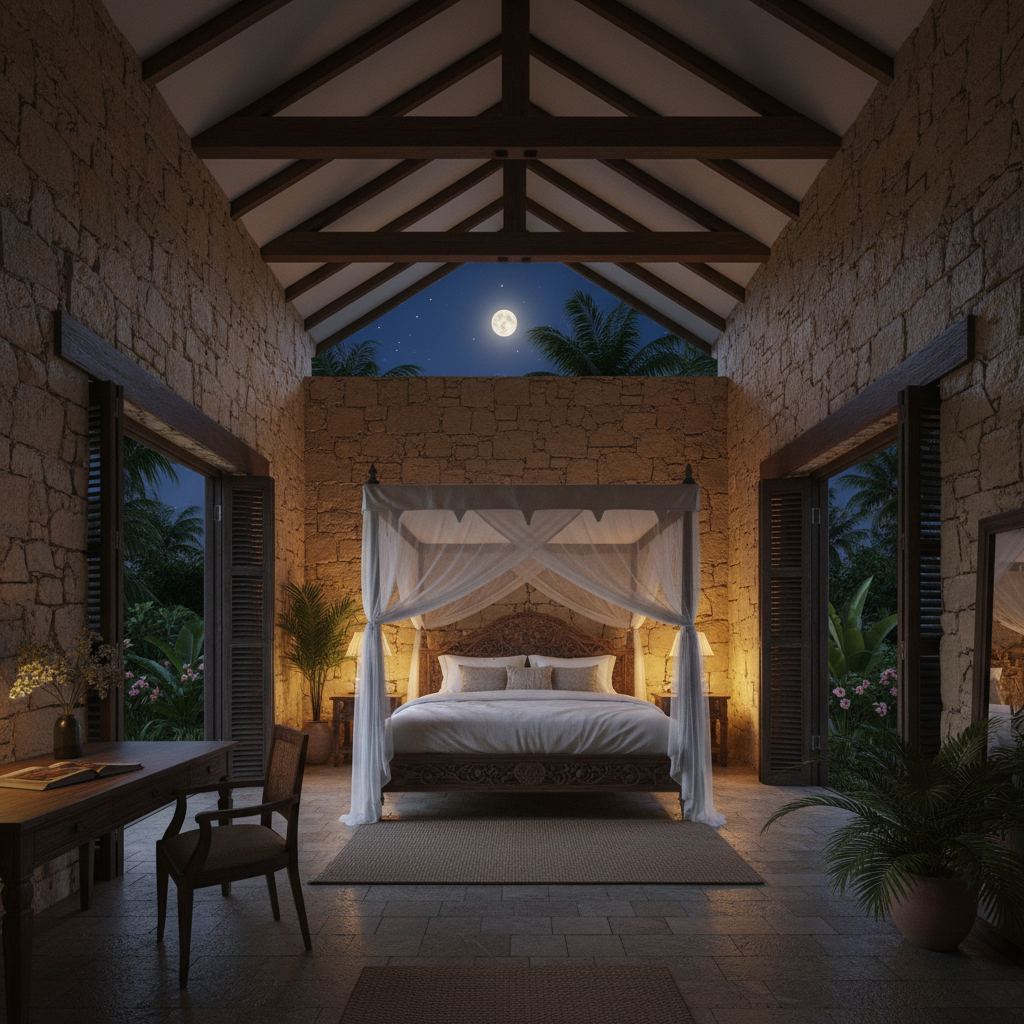
Night flushing is the most effective passive cooling strategy.
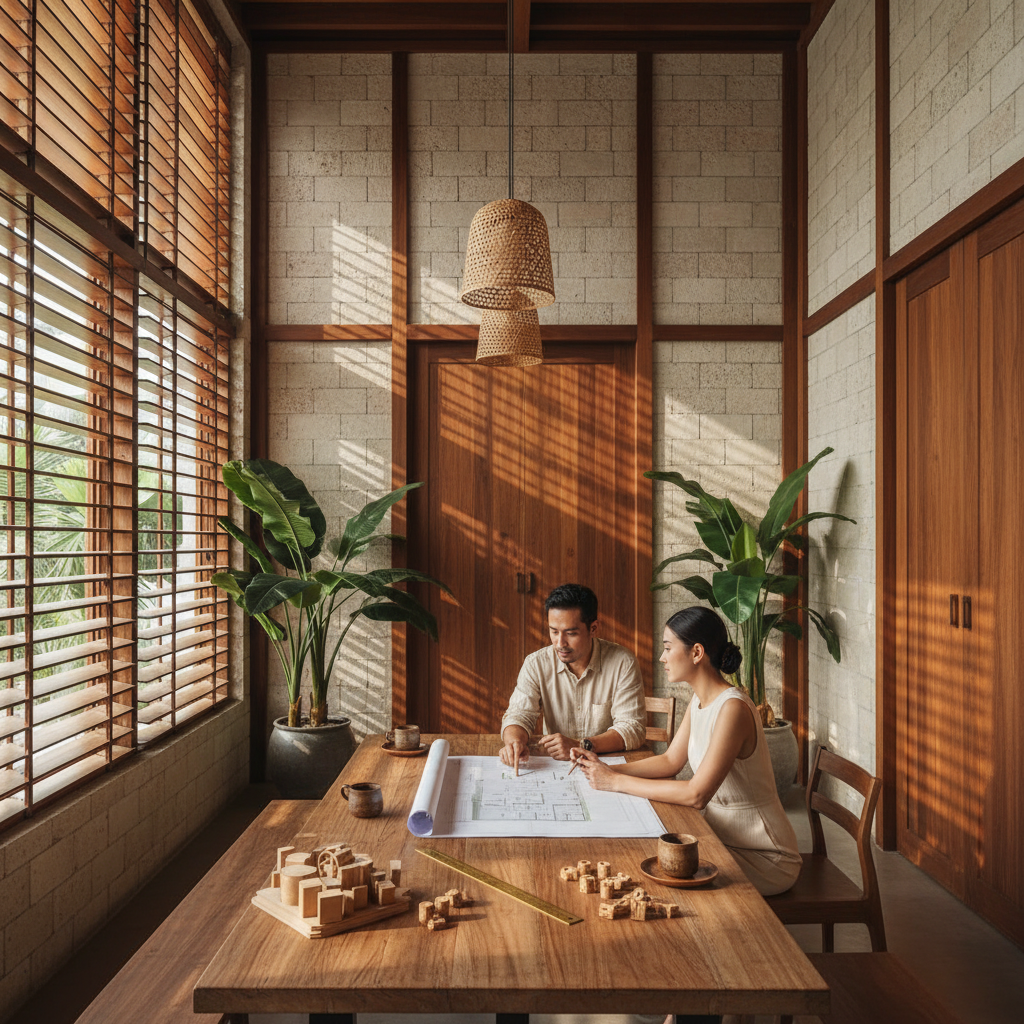
Concepta design process includes airflow modelling for every project — before any room is placed.
The Physics of Natural Ventilation
Understanding how air moves through a building is essential for effective cross-ventilation. Air flows from areas of high pressure to low pressure, drawn by temperature differences and wind forces. In a well-designed tropical house, low windows on the windward side allow cool air to enter at occupant level, while high openings on the opposite side allow warm air to exit through the stack effect. This creates a continuous air exchange that cools both the space and the thermal mass of the building itself. The key is matching inlet and outlet sizes—each opening must be large enough to handle the air volume, or the flow stalls and the space remains stuffy.
Common Obstructions and How to Avoid Them
The most common reason cross-ventilation fails is internal obstruction. Solid walls that block air paths, furniture placed against windows, and enclosed room layouts all disrupt the airflow channel. In Indonesian homes, the traditional solution was an open-plan core with high ceilings and multiple openings—a principle that modern tropical architecture must rediscover. Sliding doors, louvred panels, and transom windows above doorways can maintain privacy without blocking airflow. The principle is simple: create a clear, unobstructed path from the windward side through the living spaces to the leeward side.
Related Articles

Concepta Studio
Architecture studio, Jakarta
Human reviewed
Have a Project in Mind?
We work selectively with clients who value thoughtful, intelligent architecture.
Start a Conversation