Designing Privacy in Tropical Villas
Privacy in tropical architecture is not about walls and fences — it is about spatial sequencing and layered thresholds.
In this article
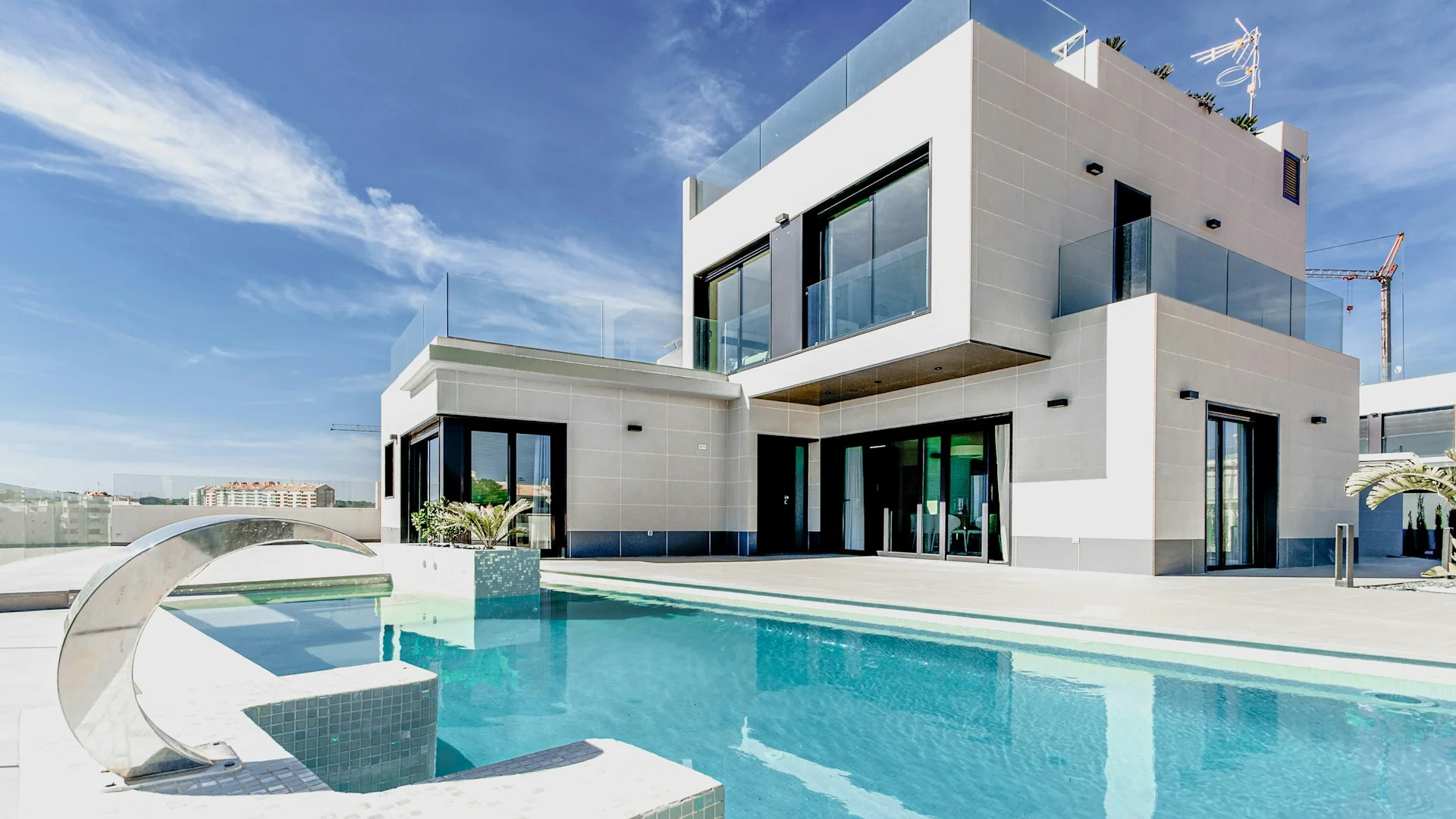
Privacy is often misunderstood in tropical villa design. Many clients ask for high walls when what they seek is seclusion — the feeling of being removed from the world without being imprisoned by barriers.
The Arrival Sequence
The most important privacy device in a tropical villa is the arrival sequence. A well-designed approach prolongs the transition from public to private. A typical sequence might involve a planted driveway, a garden path through a courtyard, and an entrance set at an oblique angle.
Courtyards as Privacy Machines
The courtyard is the most effective privacy device in tropical architecture. By arranging rooms around an enclosed outdoor space, the villa turns inward — all primary views are of the garden and sky, not the neighbour wall.
Privacy Without Isolation
The ultimate goal of villa privacy design is to create seclusion without isolation. The inhabitant should feel protected without feeling trapped. When privacy is designed as a spatial experience, the result is a true tropical sanctuary.
Garden as Privacy Buffer
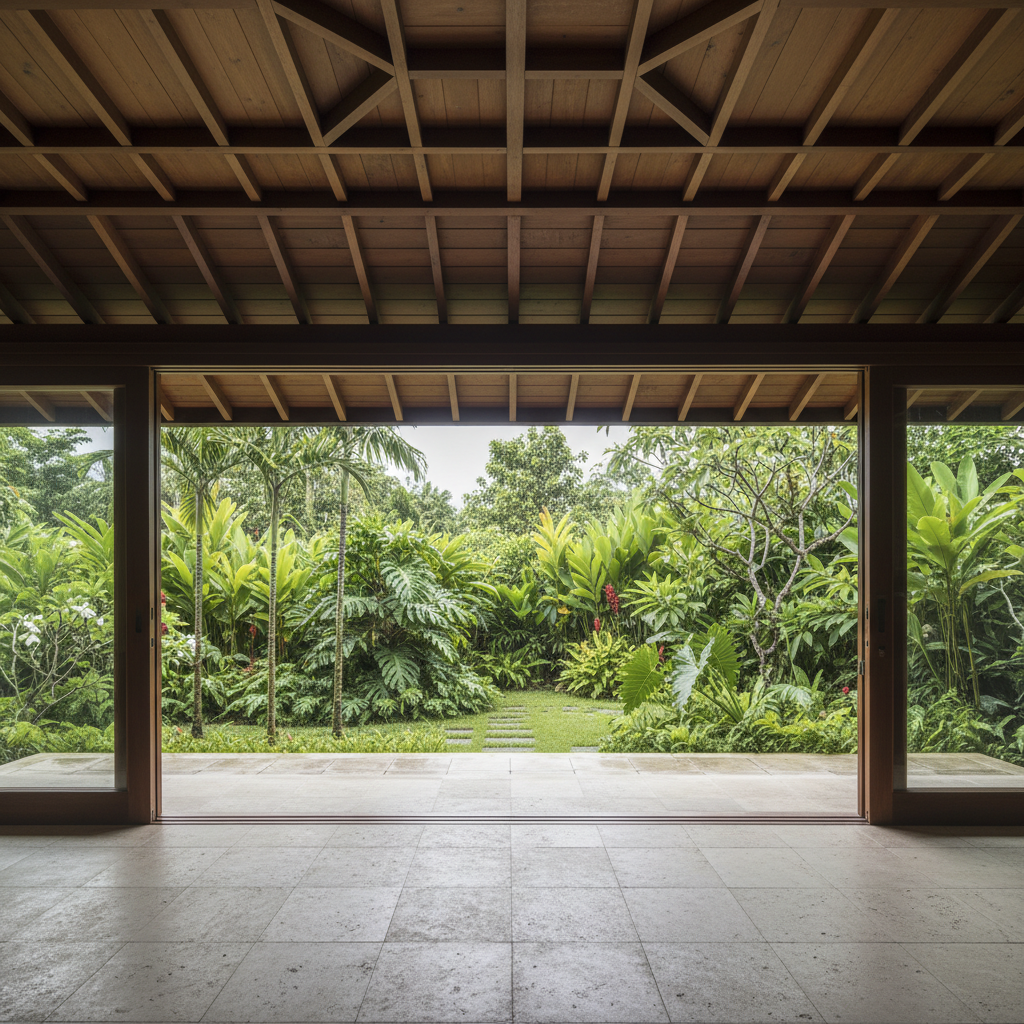
The most effective privacy strategy in tropical architecture is not the wall but the garden. A densely planted buffer zone between the public edge and the private domain provides visual screening, acoustic attenuation, and a psychological sense of separation that no fence can achieve.
The layered garden approach — canopy trees, understory planting, ground cover — creates depth that makes the transition from public to feel gradual rather than abrupt. This depth is what distinguishes a truly private villa from one that merely feels enclosed.
Privacy Through Zoning, Not Barriers
We organise villas by zones of privacy rather than by function alone. The public zone — living, dining, kitchen — sits closest to the entry. The semi-private zone — family room, study — occupies the middle ground. The private zone — bedrooms, ensuite, terrace — is most deeply nested. This gradient of privacy creates natural separation without requiring walls or corridors.
Each zone is separated not by doors but by shifts in level, material, ceiling height, or a short covered walkway. The spatial grammar of privacy becomes part of the architectural experience rather than an afterthought.
Directly visualizes the concept of layered thresholds and spatial sequencing, showing how privacy transitions from public to private areas.
Effectively contrasts traditional barrier-based privacy with the threshold-based approach, making the core argument visually clear and persuasive.
Illustrates how gardens and buffer zones are arranged to create privacy without walls, supporting the idea of using landscape as a privacy buffer.
Related Articles
Concepta Studio
Human reviewed
Have a Project in Mind?
We work selectively with clients who value thoughtful, intelligent architecture.
Start a Conversation