Why Low-Rise Buildings Need Stronger Architectural Discipline
Buildings under eight storeys carry the weight of the street. Their proportions define the quality of the city.
In this article

In cities across Indonesia, the buildings that shape our everyday experience are not the towers. They are the five, six, seven-storey structures that line our streets. Yet they receive far less architectural attention.
The Proportion Problem
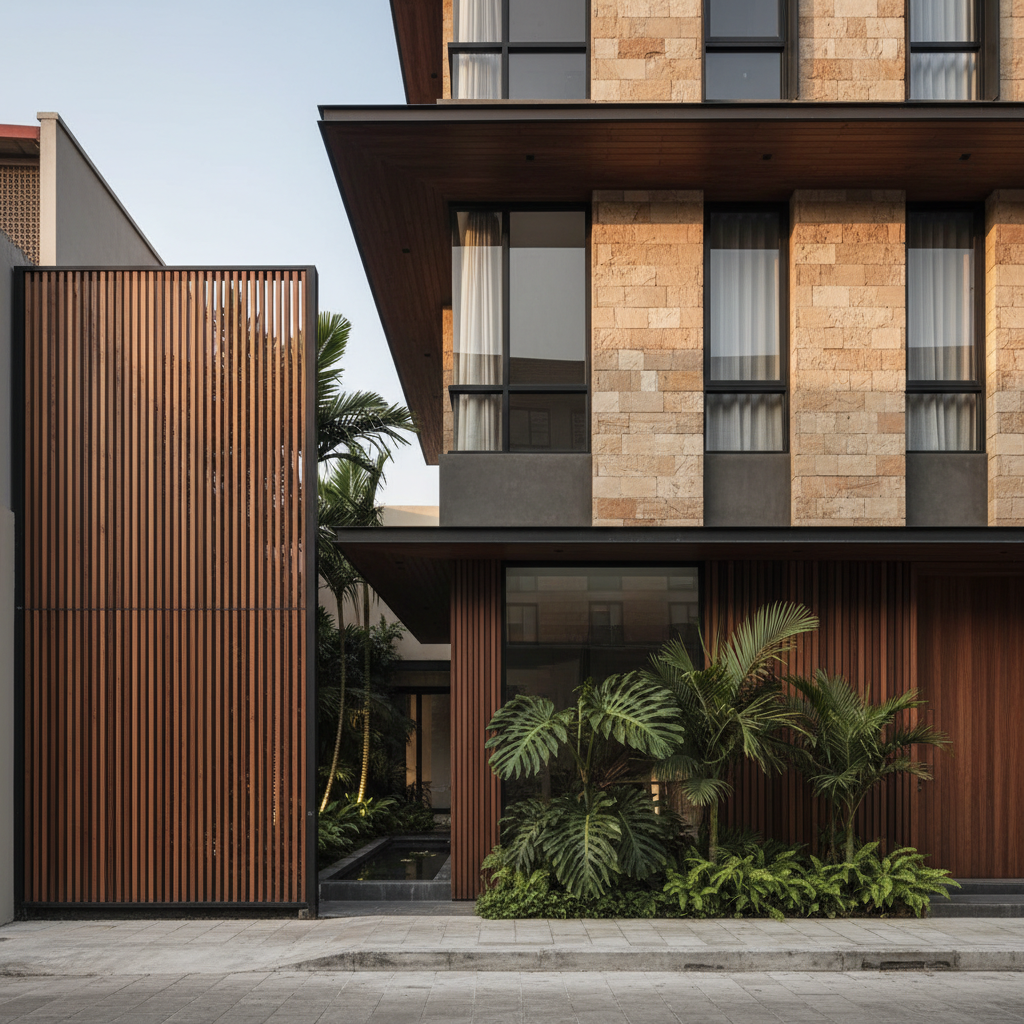
The most common failure in low-rise design is proportion. A five-storey building with a single repetitive facade reads as a monolithic block. The remedy is a clear tripartite composition: base, middle, and top.
The Facade as Climate Device
Deep overhangs, recessed windows, brise-soleil, and operable screens are not decorative. They shade the interior, channel breezes, and protect from rain. When integral to the composition, they create the deep facades that give tropical buildings their character.
A Call for Discipline
Stronger discipline does not mean more expensive materials. It means a clear strategy addressing proportion, climate, and urban context before aesthetics. Every low-rise building is an opportunity to improve the street.
Proportion and Rhythm in Facade Design
The facade of a low-rise building is not merely an envelope. It is the building's contribution to the urban fabric, read at the scale of the pedestrian, not the motorist. Every window, balcony, and material joint becomes part of a rhythm that defines the building's character.
Unlike towers, where facades are often read from a distance, low-rise facades are experienced up close. This proximity demands precision. The ratio of solid to void, the depth of reveals, the alignment of openings — these details matter enormously to the quality of the street experience.
Structure as Ordering Principle
In well-designed low-rise buildings, the structural grid is visible in the architecture. Column spacing determines room sizes. Floor-to-floor height determines the proportion of windows. The structural logic becomes the organising principle for everything else, creating coherence without decorative effort.
This transparency of structure is what gives low-rise buildings their intellectual clarity. The architecture is legible. You can read how the building works. That legibility is a form of luxury in an era of increasingly complex and mediated building envelopes.
Directly contrasts disciplined vs undisciplined proportion and rhythm in low-rise facades, making the argument visually clear for a villa-owner interested in street quality.
Illustrates how facade design serves as a climate device, a key principle for tropical architecture that a villa-owner would appreciate for comfort and energy efficiency.
Explains how structural ordering (columns, beams) creates rhythm and discipline on the facade, grounding the abstract concept in a tangible sketch for the audience.
Related Articles
Concepta Studio
Human reviewed
Have a Project in Mind?
We work selectively with clients who value thoughtful, intelligent architecture.
Start a Conversation