Courtyard Planning for Privacy in a Tropical Villa
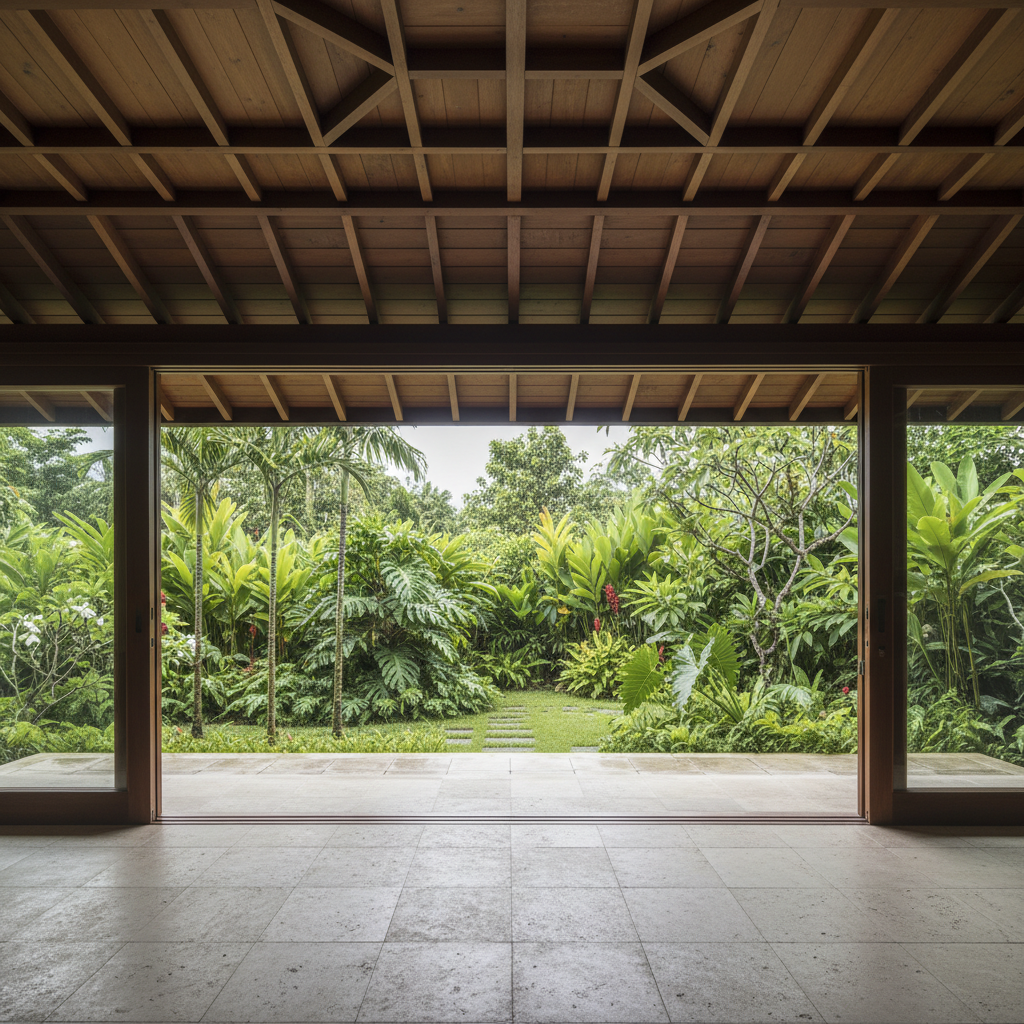
In tropical villa design, the courtyard is not merely an aesthetic device—it is a spatial tool for controlling privacy, light, and breeze. When planned with discipline, it creates a house that feels open yet completely shielded from the outside world.
In this article
A villa in the tropics should feel open to the sky but closed to the street. This is not a contradiction. It is a matter of planning. The courtyard, placed at the heart of the plan, allows every room to draw light and air from a private void, rather than from a public boundary. The result is a house that breathes without being seen.
The first move in any villa design is to decide what the building hides and what it reveals. A courtyard plan naturally conceals the interior from neighbours and passers-by. The outer walls remain solid or screened, while the inner faces open fully to the courtyard. This inversion of typical planning—where windows face outward—gives the house its quiet, introverted character.
Why the Courtyard Matters for Privacy
Privacy in a tropical villa is not about building high walls. It is about controlling distance and orientation. A well-proportioned courtyard creates a spatial buffer between the private life of the family and the public realm. Bedrooms, bathrooms, and study rooms can all open onto the courtyard without any visual connection to the street or neighbouring plots.
This arrangement also reduces the need for heavy curtains or blinds. The courtyard itself becomes the view, and that view is entirely yours. There is no need to look at a neighbour's wall or a passing car. The courtyard frames only the sky, the planting, and the changing light.
The Sequence of Arrival and Retreat
A courtyard villa works best when the entry sequence is deliberate. You do not step directly from the street into the living room. Instead, you pass through a gate, a narrow corridor, a transitional space, and then arrive at the courtyard. This sequence builds anticipation and, more importantly, establishes a threshold between public and private.
Once inside, the courtyard becomes the organising centre. All main rooms face it. Circulation happens around it. The family can move from room to room without ever needing to look outward. This is especially valuable in dense tropical neighbourhoods where plots are close together.
Controlling Sightlines and Sound
Privacy is not only visual. Sound travels easily in tropical climates, where windows are often left open. A courtyard acts as an acoustic buffer. The sound of water from a fountain or the rustle of leaves masks noise from the street. At the same time, the courtyard prevents sound from the villa from escaping too far.
The proportions of the courtyard matter. A space that is too wide becomes a field; too narrow becomes a shaft. For a villa, a courtyard with a width roughly equal to the height of the surrounding walls creates a comfortable sense of enclosure. It feels protected without feeling confined.
Working with Climate, Not Against It
In the tropics, a courtyard is not just a privacy device—it is a climate device. It allows cross-ventilation through the house without exposing the interior to direct wind or dust. The courtyard draws cool air in through shaded openings and pushes warm air up and out. This passive cooling reduces reliance on air conditioning and keeps the house comfortable throughout the day.
Deep overhangs, planting, and water elements within the courtyard further moderate the microclimate. The result is a house that is both private and naturally comfortable. The courtyard does the work that walls and curtains would otherwise have to do.
A courtyard plan is not a style. It is a spatial discipline. For a tropical villa, it is one of the most effective ways to achieve the quiet, private, and calm atmosphere that defines true residential quality.
Related Articles
Have a Project in Mind?
We work selectively with clients who value thoughtful, intelligent architecture.
Start a Conversation