The Floor Plan You See Before We Pour a Single Bag of Cement
Long before the first concrete truck arrives, the floor plan tells the story of how a villa will live. At Concepta, we draw every plan by hand, refined through AI-assisted visualisation, so our clients see their home before a single bag of cement is poured.
Most clients come to us with a rough idea of what they want: a certain number of bedrooms, an open living area, perhaps a pool. What they rarely have is a clear picture of how those spaces will feel — how light moves through them, how one room relates to another, how the house breathes. That is where the floor plan becomes essential.
A well-drawn floor plan is not merely a diagram of walls and doors. It is the first translation of your aspirations into spatial reality. It reveals whether the living room will feel generous or cramped, whether the master suite offers true privacy, whether the kitchen connects naturally to the dining area. Every dimension line carries consequence.
We begin every project with hand sketches — pencil on trace, exploring relationships between spaces before committing to a single measured line. This analogue phase is deliberate. It forces us to think about spatial quality rather than technical compliance. A room might check every area requirement on paper but feel entirely wrong in its proportions. Hand drawing catches that immediately.
Once the spatial concept is clear, we move to AI-assisted refinement. Our system generates precise floor plans with accurate dimensions, realistic furniture layouts, and proper door swings — all while preserving the hand-rendered warmth that distinguishes a presentation drawing from a construction document. The AI understands Indonesian villa typologies: deep overhangs, cross-ventilation corridors, courtyard relationships, and the privacy gradient from public entry to most private master suite.
The result is a floor plan you can read and trust. Room labels show approximate dimensions: Master Bedroom 5.5m by 4.2m rather than just Bedroom. Furniture blocks are drawn to realistic scale — a 2.0m bed, a 600mm-deep kitchen counter, a 750mm door swing. Corridors are never narrower than 1,200mm. Wall thickness reads at 150mm for internal and 200mm for external walls.
We include a north arrow and a graphic scale bar on every plan. Why? Because orientation determines how the sun hits your living room at 4pm, and scale gives you — the client — the ability to verify that the spaces match your expectations. We want you to measure. We want you to question.
Section drawings accompany every floor plan. A section cut reveals what the plan cannot: ceiling heights, roof overhangs, the relationship between indoor floor levels and the garden outside. It shows where the 3.2m ceiling in the living pavilion drops to 2.4m in the service wing, or how a stepped section follows a sloping site to preserve sightlines.
Elevations complete the picture. They show the villa as it will be seen from the outside — the massing, the material transitions, the rhythm of openings. A well-composed elevation distinguishes a building that sits comfortably in its landscape from one that fights it. In the tropical context, elevation studies validate deep roof overhangs, sun-shading devices, and the careful placement of openings for cross-ventilation.
None of these drawings are construction documents. They are conceptual and schematic — but they are architecturally correct. Every space is dimensionally plausible. Every door swing is realistic. The stair dimensions, if stairs appear, respect the Indonesian standard: riser approximately 170mm, tread approximately 280mm.
We generate these plans using Google Gemini’s native image model, which understands architectural drawing conventions. Each generated visual is saved as a Draft or Needs Review — never auto-published. Our design team reviews every plan for architectural correctness, appropriate scale, and alignment with the project brief before it reaches you.
The floor plan you see today — before we pour a single bag of cement — is the same plan that will guide the entire design and construction process. It evolves, of course, as details are refined and decisions made. But the spatial idea, the essential geometry of how your villa will live, is established from the very first drawing.
That is the value of seeing before building. And that is why we draw — by hand, by AI, by rigorous human review — before we pour.
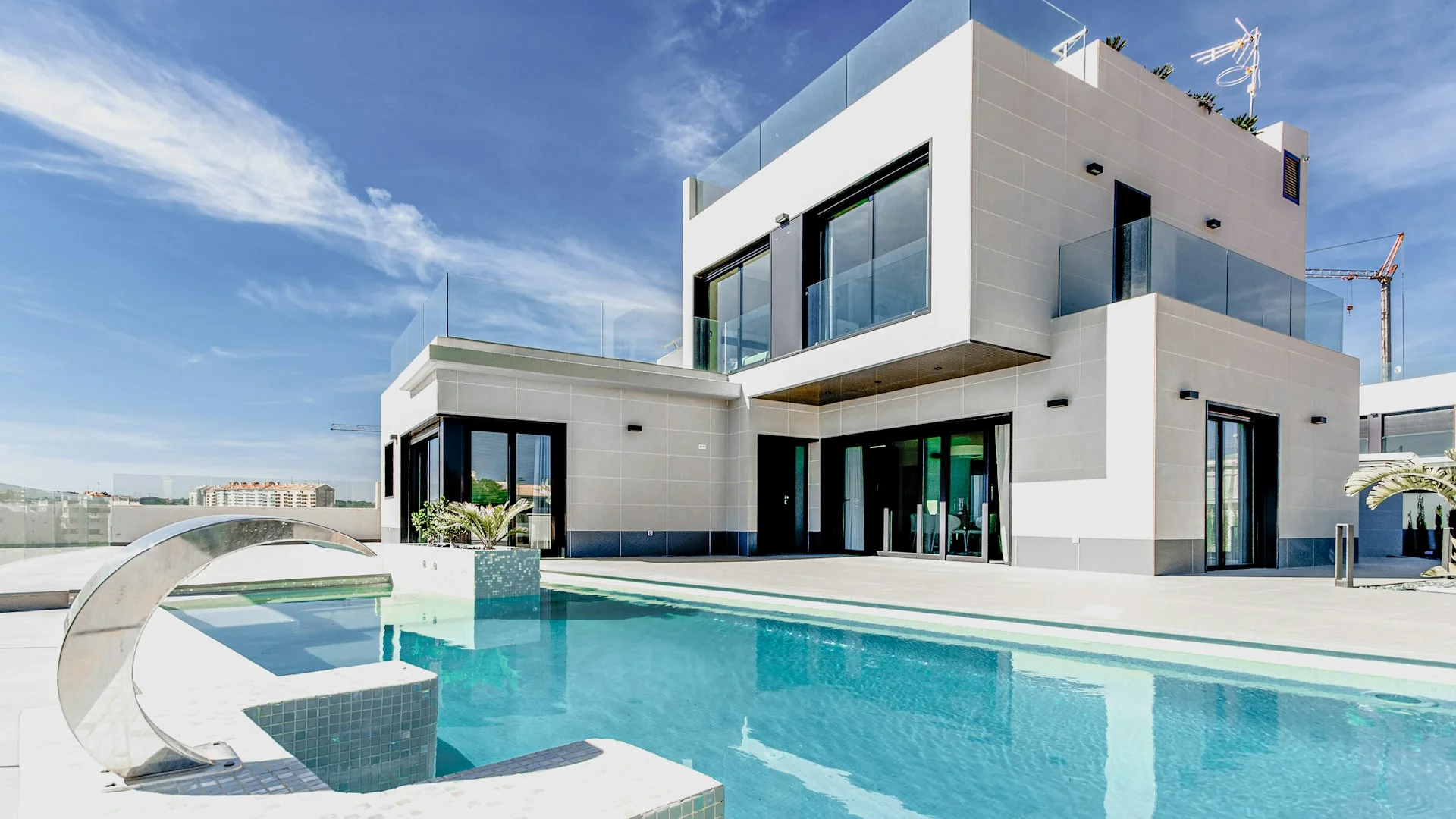
Directly illustrates the hand-drawn floor plan that tells the story of the villa's living experience before construction.
Highlights the difference between generic floor plans and Concepta's refined, story-driven plans.
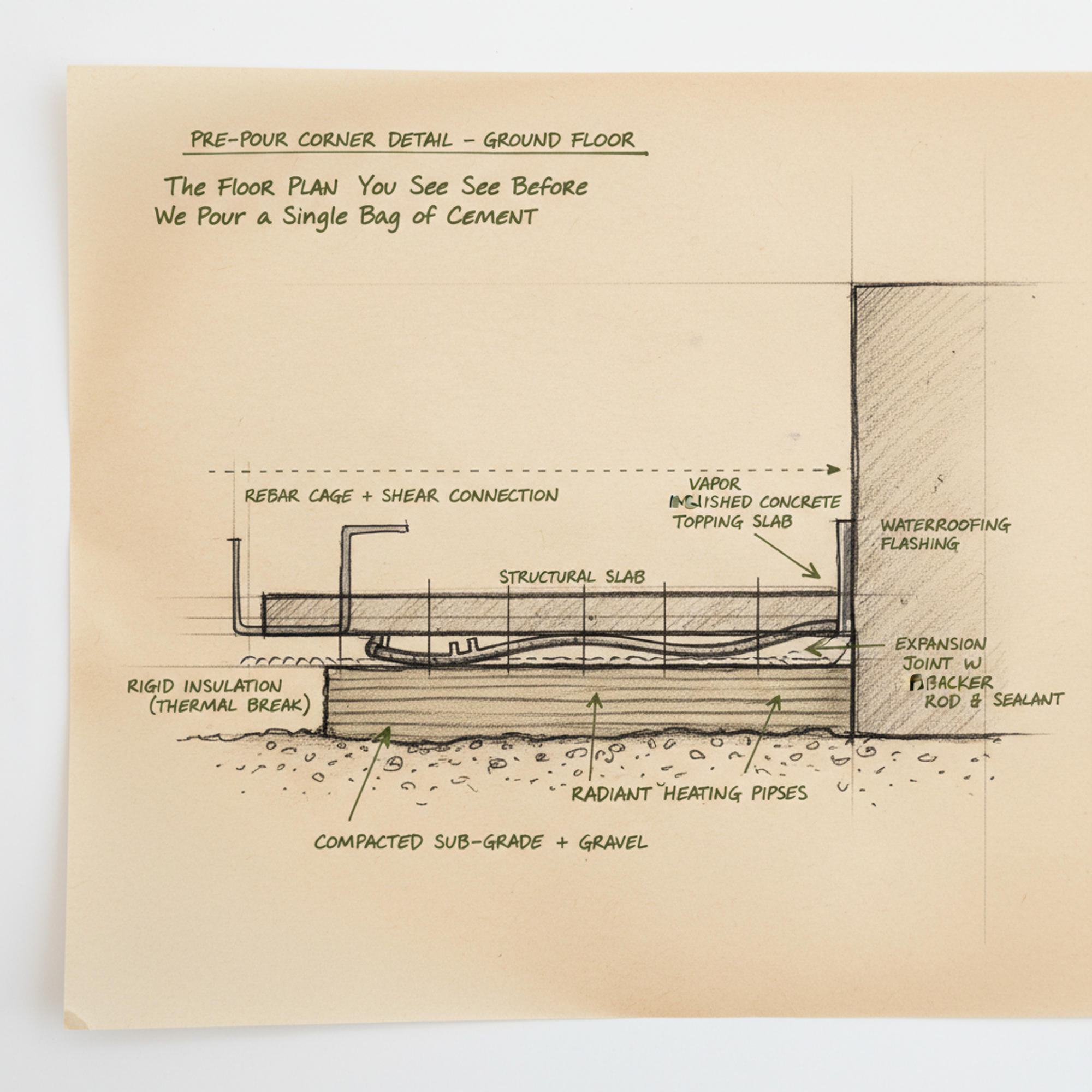
Reinforces the core message that the floor plan is the first visualization of the home's life.
Related Articles

Concepta Editorial
Concepta Editorial Team
Human reviewed
Have a Project in Mind?
We work selectively with clients who value thoughtful, intelligent architecture.
Start a Conversation