Shade as a Design Tool for Tropical Villa Comfort
In tropical architecture, shade is not an afterthought—it is the first and most essential move for comfort. We design shade through deep overhangs, layered screens, and courtyard orientation before we consider mechanical cooling.
In this article
In the tropics, heat is not the enemy—direct sun is. A room in full shade can be five degrees cooler than one exposed to afternoon light. That difference is not marginal; it is the line between a space that works and one that requires constant air-conditioning.
We begin every villa by mapping the sun’s path across the site. Then we place shade where it matters most: over the main living volume, along the east and west facades, and across outdoor circulation routes. This is not about planting a tree later. It is about designing the roof and walls to cast shadow as a deliberate, permanent condition.
Why Shade Comes First
Many clients assume tropical comfort requires large windows and open plans. But glass admits heat. The better strategy is to first control solar gain through deep overhangs and horizontal louvers, then open the building selectively to breeze. Shade reduces the cooling load before the building is even occupied.
This approach also shapes the experience of the villa. A shaded terrace feels protective. A shaded courtyard invites movement. The quality of light in a shaded room is soft, even, and calm—exactly what a private residence should feel like.
Overhangs and the Depth of Shadow
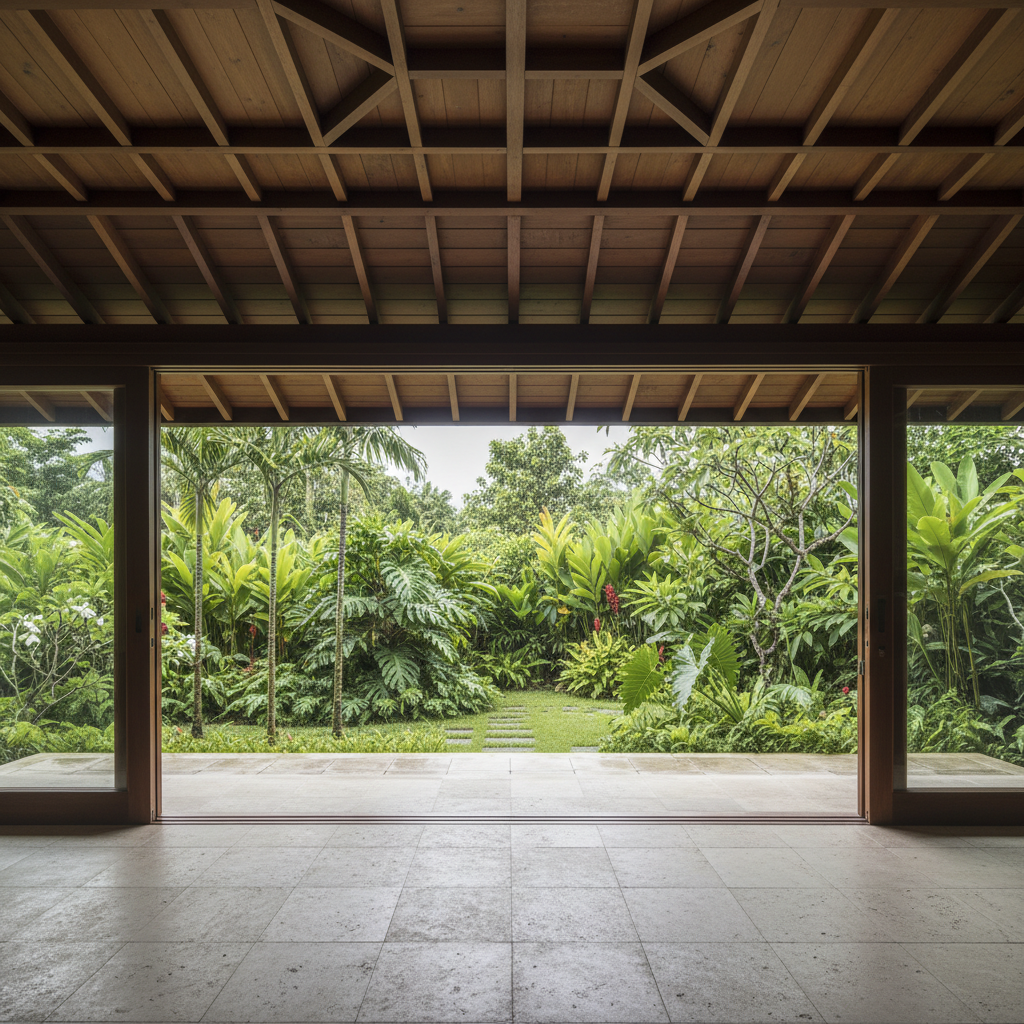
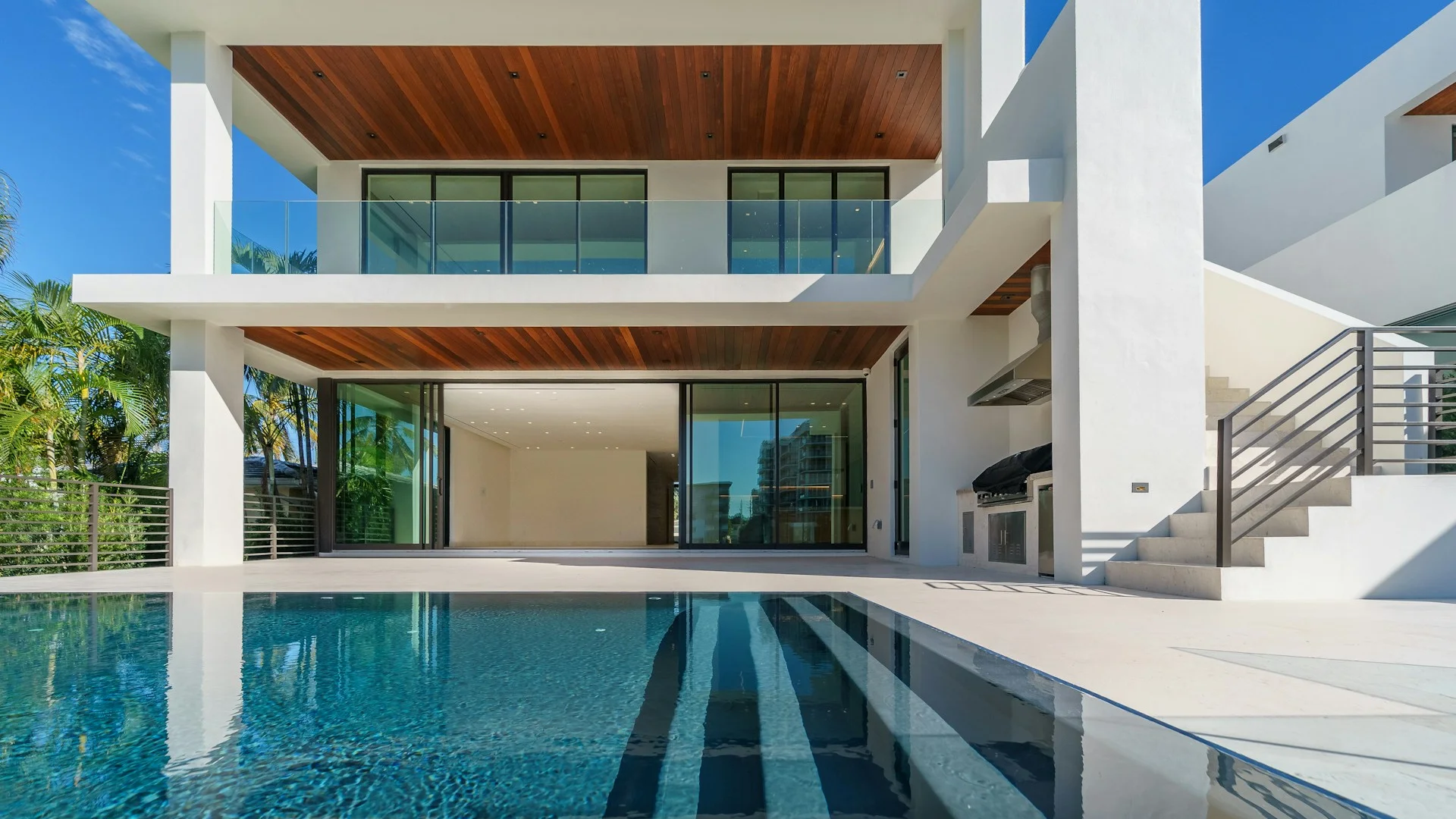
The most effective shading device is the roof overhang. We specify overhangs of at least 1.2 meters on the north and south faces, and deeper on the east and west. The depth is calculated based on the angle of the sun at the hottest part of the day. A shallow overhang is useless; a deep one creates a shadow that cools the wall and the ground below.
We also use the overhang to define the threshold between inside and outside. The shadow line becomes the edge of the room. This is not decorative. It is a practical device that allows the villa to breathe without overheating.
Screens That Filter, Not Block
Solid walls block light but also block air. We prefer screens—vertical battens, perforated metal, or brickwork with gaps—that filter the sun while allowing breeze to pass. The screen becomes a veil. It softens the view out while protecting the interior from glare.
These screens also create layered depth on the facade. A villa with a single plane of glass reads as flat. One with a screen in front reads as carved, deliberate, and private. The shade from the screen changes throughout the day, giving the architecture a living quality without any mechanical input.
Courtyards and the Shade They Create
A courtyard is not just an outdoor room. It is a shading device for the building itself. When the villa wraps around a central void, each wing casts shade on the opposite wall. The courtyard floor stays cool because it is shielded from direct sun for most of the day.
We orient the courtyard to capture prevailing breezes, then use the shaded walls to reflect indirect light into the interior. The result is a naturally cooled core that connects every room. No air-conditioning is needed in the transition spaces. That is the quiet luxury of a well-shaded villa.
Related Articles
Have a Project in Mind?
We work selectively with clients who value thoughtful, intelligent architecture.
Start a Conversation