What Villa Owners Should Prepare Before Starting Concept Design
Concept design is not about sketches or mood boards. It begins with the owner's ability to articulate how they want to live, move, and rest. Here is what I ask every client to prepare before we draw a single line.
In this article
Concept design is often mistaken for the moment when architects produce sketches or mood boards. In my practice, it begins earlier. It begins with the owner. Before I draw, I need to understand not just what you want to build, but how you intend to inhabit it. The most successful villas come from owners who prepare thoughtfully. Here is what I ask every client to prepare before we start.
Understand Your Daily Rituals
A villa is not a stage set. It is a container for daily life. I ask owners to describe a typical day, from waking to sleeping. Where do you have coffee? Do you work from home? How do you entertain? Do you prefer open spaces or intimate corners? These rituals define room adjacencies, circulation, and orientation. Without this clarity, the design risks being generic.
Define Privacy Before Beauty
In tropical contexts, privacy is not just about fences or walls. It is about how the building relates to its neighbors, the street, and the sun. I ask owners to rank their privacy needs: which rooms must feel completely secluded, and which can engage with the landscape? This hierarchy drives the placement of courtyards, windows, and thresholds. Beauty follows privacy, not the other way around.
Study Your Site Without Emotion
Owners often fall in love with a view or a tree. I ask them to step back and observe the site objectively. Document sun paths, prevailing winds, noise sources, and sightlines from neighboring properties. A site survey should include topography, drainage, and soil conditions. These factors determine where a villa can sit, how it breathes, and how it remains comfortable without mechanical cooling.
Clarify the Threshold and Arrival Sequence
The arrival sequence is the first architectural experience. I ask owners to describe how they want to feel when they enter. Should the villa reveal itself gradually, or present a clear arrival point? Should guests see the main living space immediately, or be guided through a courtyard? This sequence sets the tone for the entire design. It is not a detail; it is a spatial decision.
Know Your Climate, Not Just Your Location
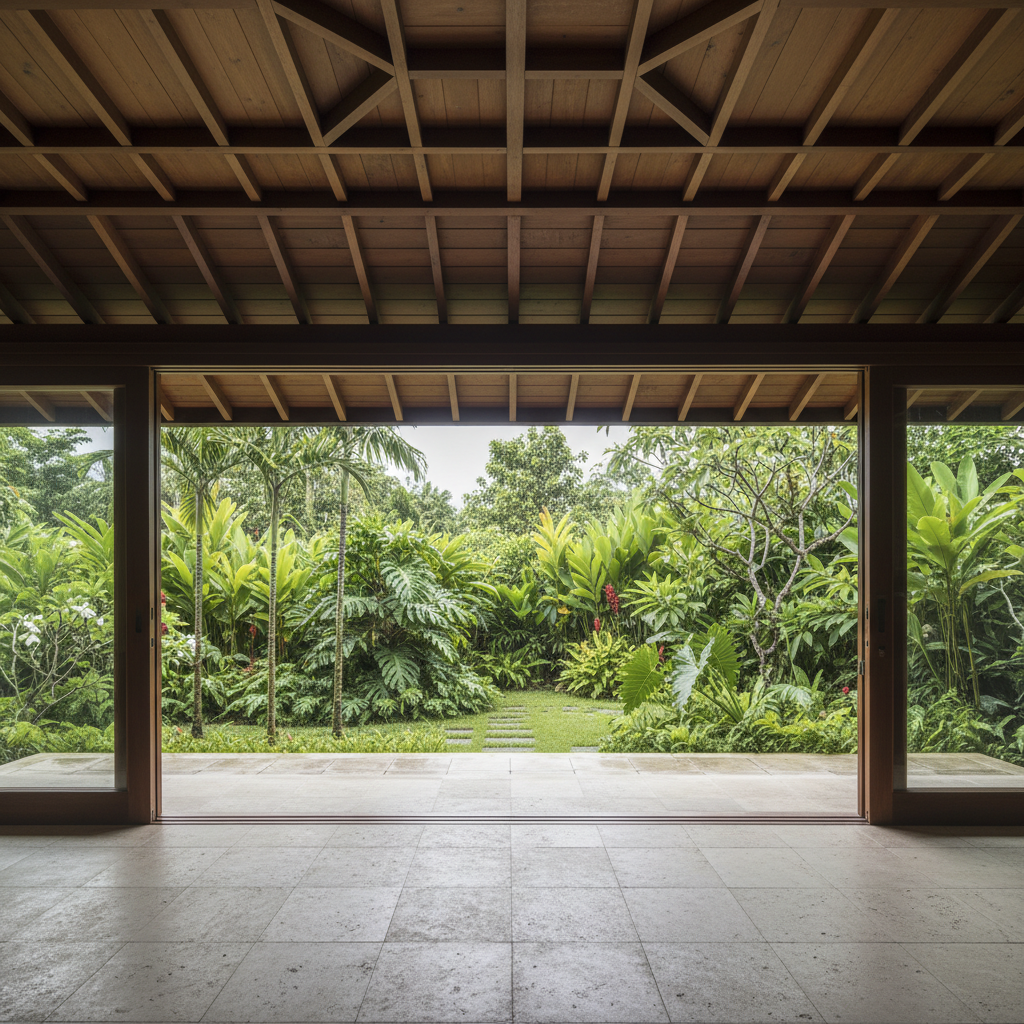
Tropical architecture is not a style. It is a response to heat, humidity, rain, and light. I ask owners to note how their site behaves during different seasons. Where does the afternoon sun strike? Which direction brings the breeze? Where does water pool during a storm? These observations inform roof overhangs, window placement, material selection, and ventilation strategy. A villa that ignores climate will always feel uncomfortable, regardless of its finishes.
Set a Realistic Brief on Space and Budget
Finally, I ask owners to be honest about what they truly need versus what they imagine. A villa with too many rooms often feels empty. A disciplined plan, with carefully considered spaces, feels generous. Prepare a room list with approximate sizes, and a budget that includes contingencies for site works, landscaping, and fees. Concept design is most productive when the constraints are clear from the start.
These preparations do not require architectural training. They require reflection. When an owner arrives with this clarity, the concept design phase becomes a conversation, not a guessing game. The result is a villa that feels inevitable, quiet, and deeply livable.
Related Articles
Have a Project in Mind?
We work selectively with clients who value thoughtful, intelligent architecture.
Start a Conversation