Why Tropical Courtyards Create Better Indoor-Outdoor Living
A courtyard is not merely an open space; it is a climate device, a privacy buffer, and the quiet heart of a home. In tropical architecture, it transforms indoor-outdoor living from a concept into a daily experience.
In this article
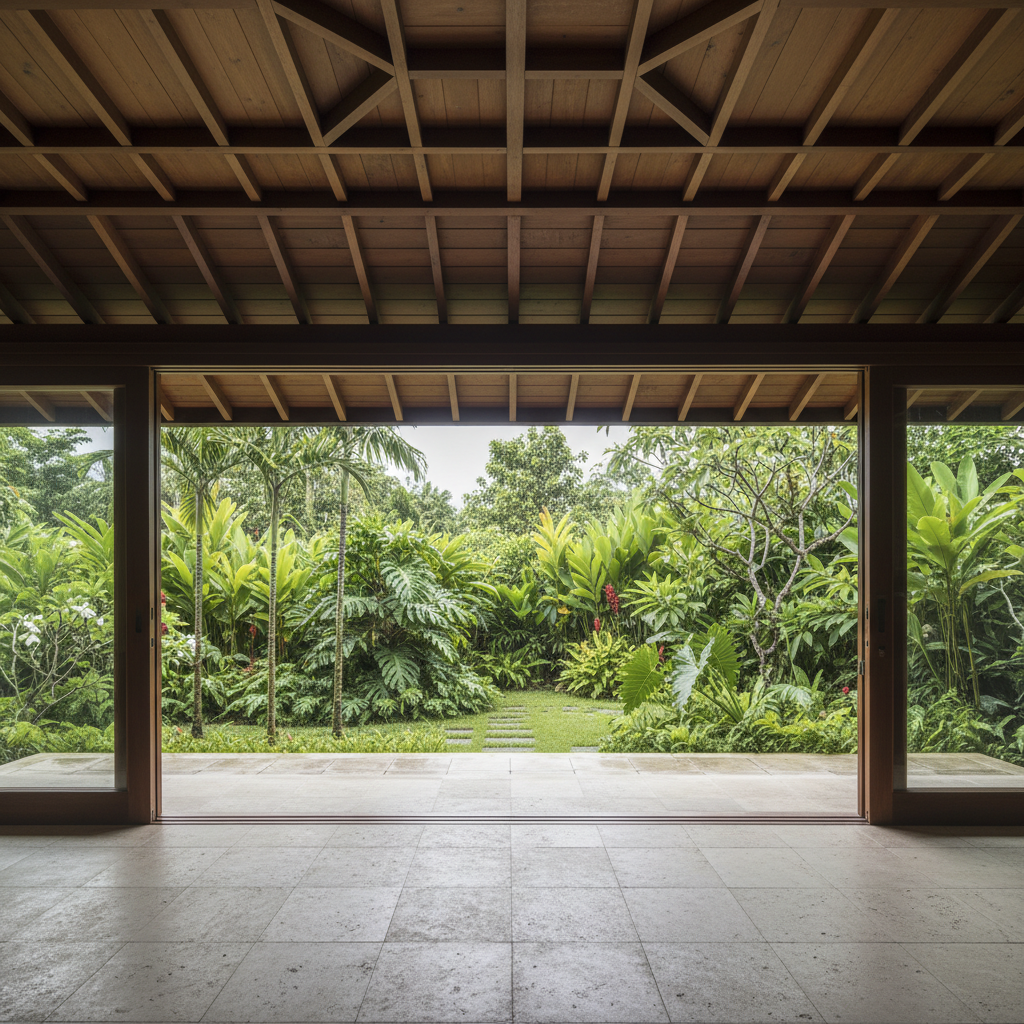
In tropical climates, the courtyard is one of the most effective architectural tools. It pulls light and air deep into the plan while maintaining strict visual privacy from neighbors and the street. For a villa, this means every room can open to a controlled outdoor space, not just the rear garden.
The courtyard also moderates microclimate. During the day, it collects heat and releases it at night, encouraging natural cross-ventilation. With careful orientation, a courtyard can channel prevailing breezes through the house, reducing reliance on mechanical cooling. This is not a stylistic gesture; it is a functional response to humidity and heat.
The Courtyard as a Climate Device
A well-designed courtyard acts as a thermal lung. It draws hot air upward and out, while shaded walls and water features cool the surrounding rooms. In practice, this creates a measurable difference in indoor comfort. The courtyard becomes the central organizing element, not an afterthought.
Privacy Without Walls
Indoor-outdoor living often fails because it exposes the interior to outside view. A courtyard solves this by inverting the relationship: the house wraps around the garden, not the other way around. Every room faces inward, toward a private landscape. This allows full-height glass and deep overhangs without compromising seclusion.
A Sequence of Light and Shadow
The courtyard also shapes daily ritual. Morning light enters from the east, passes through the garden, and softens as it reaches interior walls. By afternoon, deep shadows from overhangs protect the rooms while the courtyard remains luminous. This modulation of light is what makes a house feel calm and lived-in, not static.
Living With the Garden
When the courtyard is planted with native species, the boundary between inside and outside dissolves further. The sound of leaves, the movement of light through foliage, and the scent of damp earth after rain become part of the interior experience. This is not decoration; it is the reason tropical courtyards create a deeper sense of dwelling.
Related Articles
Have a Project in Mind?
We work selectively with clients who value thoughtful, intelligent architecture.
Start a Conversation